Sunday, 24 June 2007

Who is right?


Bellamy: The Magpies want me to fail
Bellamy believes Newcastle are bitter that he has ended up at Liverpool following his acrimonious exit from the Magpies to Blackburn.
Bellamy was called a "little upstart" by Newcastle coach Terry McDermott after the pair clashed following Liverpool's 2-0 win over the Magpies.
"There was always going to be something from Newcastle but it doesn't bother me. Not at all," said striker Bellamy.
"I was half expecting something because my being at Liverpool is hurting them."
He added: "This is the club I have always wanted to play for and maybe there are people who are not too happy about that.
"I'm sure there are people there (at Newcastle) who don't want me to succeed here, because it reminds them every time.
"It was a ridiculously cheap fee I went to Blackburn for, it's not nice for me to be remembered for that.
"What was it, about £3.75m? That hurts. I know that but that is the game we play."
Liverpool boss Rafael Benitez had defended Bellamy after McDermott's outburst.
McDermott said: "Everywhere he has been he has been in bother and it is starting again at Liverpool."
But Benitez responded: "Never mind Craig's history, his conduct since joining us has been perfect for me."
McDermott sparked the row when he revealed how Bellamy interrupted a conversation with referee Mark Halsey after the final whistle.
He said: "I was talking to the referee. It had nothing to do with anyone else and I take exception to little upstarts like him.
"I do not like it when people like to think they are bigger than clubs. When he was at Newcastle, he thought he was a big cheese.
"There was no need for it at all and he was 100 per cent out of order."
But Benitez launched a passionate defence of the Welsh international he signed from Blackburn in a £6m summer deal.
He said: "You have to analyse what he does on the pitch, and all I saw on Wednesday was a player closing down defenders in the last minute to protect our lead.
"Off the pitch, I promise you he is really focused on doing his best for us. I spoke to him about his background before he signed for us, and I could tell he sensed this might be his last opportunity at a big club.
"He wants to make the most of it and that shines through in every training session.
"Craig has a good relationship with his team-mates too. He has no problems with anyone and has settled in really well.
"He is desperate to do well for Liverpool and you cannot say anything about him. Maybe there are issues with Newcastle from his time there, but it was nothing serious."

Iwan Roberts defends put-upon Bellamy
Former Wales striker Iwan Roberts says Alan Shearer was wrong to warn Newcastle United that it would be a mistake to re-sign Craig Bellamy.
Wales and Liverpool striker Bellamy has been linked with a move back to St James' Park despite leaving the Magpies two years ago after a turbulent time.
"It's a bit of a shock that he (Shearer) has come out in the papers and hammered Craig," Roberts said.
"When Craig was in the Newcastle side they were a much, much better team."
Roberts played with Bellamy, 27, both at club level with Norwich City and with the Welsh national side.
He recognises Bellamy's fiery temperament, which led to bust-ups with then Newcastle boss Graeme Souness, coach Terry McDermott and also an alleged criticism of Newcastle and England legend Shearer.
"They (Shearer and Bellamy) have had their differences in the past, incidents have happened," Roberts told BBC Sport Wales.
"Obviously Shearer still feels very bitter about that, but it's not like him to criticise somebody in public.
"It is a hammering to come out with a statement like that, that he had to go out and get drunk when he heard Newcastle could be coming back in for Craig."
New Newcastle manager Sam Allardyce is still seeking to strengthen his squad and is not scared of taking on players who have had disciplinary problems at other clubs.
The former Bolton boss paid £5.8m for Joey Barton last week despite a list of misdemeanours at Manchester City.
Bellamy has his own list of troubles, the latest an alleged fracas with Liverpool team-mate John Arne Riise in February at a training camp.

Shearer unleashes Bellamy attack
Alan Shearer has warned Newcastle boss Sam Allardyce not to bring Craig Bellamy back to his former club.
Allardyce has been linked with a move for Liverpool's 27-year-old striker, who left St James' Park two years ago.
Bellamy had bust-ups with then boss Graeme Souness and also allegedly criticised Newcastle legend Shearer.
Shearer said: "Has no-one learned their lesson about signing him? If only Rafa Benitez had rung me I would have told him exactly what he was like."
Shearer added: "I was having a few days away in France with my former Newcastle team-mates Gary Speed and Steve Harper and the wives and I picked up the newspaper. I was having a fantastic day.
"But when I read Bellamy for Newcastle I thought I would definitely have to have another drink. I had several. I hope there's nothing in it."
Bellamy also had a tunnel bust-up with Newcastle coach Terry McDermott after Liverpool's 2-0 win at Anfield last season.
Shearer said: "It would be interesting, especially with Terry McDermott still at the club. There was a scuffle at Anfield when Craig and Terry were coming down the tunnel."

Thierry Henry's final salute to the Gunners


Thierry Henry is confident Arsenal still have a bright future despite his impending move to Barcelona.
The 29-year-old France striker, who has been with the Gunners since 1999, is on the brink of completing a £16m switch to the Nou Camp.
Henry told Arsenal's website: "I don't believe what everybody is saying about the club collapsing, having a lack of players and everyone leaving.
"The team here is growing and there is some amazing talent."
Henry pointed to the emergence of young midfielder Cesc Fabregas since Patrick Vieira left for Juventus in 2005 as proof that Arsene Wenger's side can cope without him.
This is solely my decision, no-one has forced me to do anything, Henry said.
"I do think this is the right time for Robin van Persie, Emmanuel Adebayor and Nicklas Bendtner, who is coming back from Birmingham, to shine," Henry added.
"Hopefully they will do it. As soon as you know they can do it, they will forget about me, that's the way it is.
"When Patrick left everyone was devastated, including me and then after that a little guy came around called Cesc Fabregas and, although I didn't agree with it, everyone started saying 'who needs Patrick Vieira'?
"Cesc is a world-class player, Robin van Persie is a world-class player, hopefully Adebayor will become a world-class player, Tomas Rosicky is a world-class player, Jens Lehmann is a world-class player, Kolo Toure and William Gallas are world-class players. You can go through the whole squad like that.
"I will now become an Arsenal fan and will be looking at every result. I am sure the team will be successful."
Henry also gave a personal tribute to Gunners fans for their support during his eight years at the club.
"I would like say to you that you have been tremendous for me and I really do appreciate it," he explained.
"I am shaking as I say this. I will always remember you and I will have you in my head and my heart.
"I wanted to reassure you that I always gave 100% here. I hope you appreciate what I did here because I appreciate what you did for me.
"I grew as a man and became a better football player - I will always take that with me no matter what happens.
"Arsenal will be in my blood as well as my heart. I will always, always, always remember you guys. I said I was going to be a Gunner for life and I did not lie because when you are a Gunner you will always be a Gunner.
"The club is in my heart and will remain in my heart forever."

Vietnam forges ahead with US ties


Vietnam forges ahead with US ties
By Giang Nguyen BBC, Vietnamese service
Nguyen Minh Triet has made history this week as the first Vietnamese president to visit the United States since the war ended in 1975.
The trip marks a high point in the increasingly cordial relationships between the former enemies.
It also has huge implications for Vietnam at home and abroad.
But the president will be hoping that US concerns over human rights in his country do not overshadow his visit.
Things have changes since Mr Triet was a Viet Cong fighter in the jungle - on this trip, he will be received at the White House.
His efforts to promote trade and attract more US investment in Vietnam have proved popular in American business circles, but there is a lot riding on the visit back in Vietnam.
Capitalist reforms
A renowned reformist and business-friendly pragmatist, Mr Triet, 64, and his supporters have spent years building up their political credentials by following a policy of economic liberalisation while holding on to their communist principles.
If they had one, their motto would probably be something like, "the bigger the market, the better" - not just for the party, but also for government officials and their families.
Wealth is no longer a badge of shame in Communist Vietnam, and last year the government passed legislation allowing its members to be have unlimited involvement in private business, thus dismissing a major piece of socialist dogma.
The downside is that corruption is rampant, and the richest people in Vietnam are often those who are able to use their privileged access to information to manipulate the property market and export quotas, and who acquire millions of dollars-worth of shares in newly privatised enterprises.
This week, a former Vietnamese deputy trade minister, Mai Van Dau, was given a 12-year sentence for bribery relating to US textile quotas.
His son, 35 year-old Mai Thanh Hai, will serve a five-year sentence for using his father's influence to extort $35,000 from garment companies, and for using a fake university diploma to secure his ministry post.
Domestic support
A successful visit to the US will further strengthen Mr Triet's vision of a strong, authoritative Vietnam supported by Washington and international financial institutions.
Experts such as J Peter Pham of the James Madison University in Virginia also believe the US has a unique opportunity to make Vietnam a valuable ally in possible future attempts by Washington to control Chinese expansion.
We want the US government to engage more with Hanoi to give them more chance to relax political freedoms Thai Van Tran Californian State Assembly
The visit to the White House will certainly help Mr Triet weaken the so-called Northern Faction, which is keen on a closer relationship with China and resistant of efforts to reform the party apparatus.
The group is reportedly run from behind the Vietnamese political scene by retired leaders such as Do Muoi and Le Duc Anh.
It is represented by the party's Secretary General Nong Duc Manh, who made a friendly visit to Cuba early this month.
Mr Triet clearly hopes that a strong partnership with the US will guarantee political stability for Hanoi in the years to come, and give international legitimacy to the ruling Communist Party.
Such legitimacy could, however, be used as cover when harassing political dissidents.
Human rights concerns
Mr Triet knows that making friends in the US is not easy, and that international criticism of Vietnam's human rights situation will complicate the talks.
The Vietnamese-American community has already staged demonstrations against the visit, and recently US President George Bush has been more outspoken than ever about developing democracy in the world.
He went as far as mentioning Vietnam in a speech at the recent G8 summit in Germany, criticising the state authorities for rolling back earlier "freedom".
In an unusual move designed to address public concerns, Mr Bush invited four American-based Vietnamese human rights activists to the White House in May.
Meanwhile, Vice-President Dick Cheney received letter from Vietnamese dissident Hoang Minh Chinh in Hanoi as recently as 14 June.
Recently, Hanoi was pressured by Washington into releasing Nguyen Vu Binh, a dissident journalist, and Le Quoc Quan, a lawyer who had campaigned for political pluralism.
Pragmatic approach
But there has been a marked change in the mood of the exiled Vietnamese.
Many now believe forging business links with Vietnam is a priority.
Trinh Trung, a businessman in Virginia, told the BBC's Vietnamese service: "Yes, they can talk about human rights and religious freedom every year, but we keep doing business with Vietnam. Freedom is about people's free choice after all."
Others, like Thai Van Tran, a Vietnamese-born member of the Californian State Assembly, want to promote trade with Hanoi but also want to keep democracy and human rights high on the agenda.
"We want the US government to engage more with Hanoi to give them more chance to relax political freedom," he said.
But some war veterans in Vietnam are concerned about Hanoi's attempts at a rapprochement.
Thanh Thao, a former Viet Cong and poet renowned for his democratic views, warned the leadership not to make friends with Washington too fast and at all costs.
"We need a roadmap. We the Vietnamese are always in a rush to make friends," he said.
Talking on an overseas Vietnamese website to fellow writers, Thanh Thao said he wanted the Vietnamese to build a truly "free society" before engaging into a new relationship with the US.
Desire for change
While the Bush administration knows that it cannot ignore the voices of the two-million strong Vietnamese-American community in their dealings with Vietnam, it would be wrong to assume that Mr Bush and his successor will seek to change Vietnamese politics overnight.
Vietnam will remain a mono-party system in the years to come, but a closer relationship with the US will inevitably mean more American influence in the Vietnamese policy-making process.
And this is exactly what some of the reformists in Hanoi want.
Nguyen Dinh Luong, Vietnam's former chief negotiator at the WTO, said Vietnam needed to "increase Americanism" in its economy.
In other words, he said, Vietnam can only make the best out of US investments with a deep structural reform and a professional civil servants corps.
Despite the differing views on human rights, democracy and religious freedoms, there has never been so much support for developing mutual trade and a US engagement with Vietnam.

Bush hails growth in ties with Vietnam

Published: June 22 2007 23:23

Last updated: June 22 2007 23:23
US President George W. Bush on Friday hailed the rapid growth in economic ties between the US and Vietnam but warned that the broader bilateral relationship risked being soured by Hanoi’s recent clampdown on pro-democracy activists.
Mr Bush delivered the message during a meeting with Vietnam’s President Nguyen Minh Triet at the White House, as part of the first visit to the US by a Vietnamese head of state since the Vietnam war.
The US is Vietnam’s biggest trading partner, with two-way trade up 23 per cent last year from the year before to nearly $10bn (€7.5bn, £5bn). The former enemies this week signed a trade and investment pact intended to further deepen the relationship.
But Mr Triet’s six-day visit has been overshadowed by protests about the recent arrests and sentencing of several Vietnamese dissidents.
“I explained to the president we want to have good relations with Vietnam. And we’ve got good economic relations,” said Mr Bush. “I also made it very clear that in order for relations to grow deeper, it’s important for our friends to have a strong commitment to human rights and freedom and democracy.”
Mr Triet promised to increase dialogue with the US about human rights but said the issue should not be allowed to “afflict our overall larger interests”.
Other items on the agenda included US support for the fight against Aids in south-east Asia and co-operation in the search for the remains of US soldiers missing in Vietnam.
A few hundred Vietnamese-American pro-democracy activists gathered outside the White House shouting slogans as the leaders met.
Human rights groups have described Hanoi’s crackdown on dissidents as the most severe for years, reflecting efforts by the communist regime to prevent economic growth from weakening its grip over political life.
A national legislative election in May was touted by Vietnam as evidence of growing public participation in the political process. But most of the candidates were Communist party members.
“Vietnam has now taken its place on the world economic stage but its human rights record lags far behind,” said Sophie Richardson, deputy Asia director for Human Rights Watch.
Mr Triet has sought to keep the focus of his visit on trade and investment, visiting the New York Stock Exchange and US Chamber of Commerce before the White House.
More than 100 Vietnamese business leaders have accompanied him to the US, taking advantage of opportunities created by entry into the World Trade Organisation in January.
Karan Bhatia, the deputy US trade representative, described the trade and investment framework deal signed this week as an “important step forward” in economic ties. The pact is widely viewed as a first step towards a possible bilateral free-trade deal. Although head of state, Mr Triet holds less political power than the prime minister and secretary-general of the Communist party. Phan Van Khai, the then prime minister, visited the White House in 2005 to mark the 10th anniversary of normalised ties.

By Andrew Ward in Washington

Monday, 18 June 2007

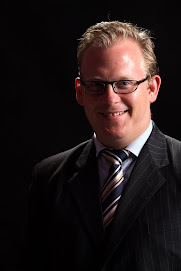
Bio: Mark Fraser


Mark Fraser is the Managing Lawyer of Frasers Law Company.
Frasers Law Company was the first foreign law firm to establish a foreign law company in Vietnam, and incorporates the Vietnam practice of one of the largest Australian law firms, Freehills.
Mark is a graduate of the University of Auckland holding degrees in law and commerce (accountancy). He is admitted as a barrister and solicitor in New Zealand and admitted as a legal practitioner in the Supreme Court of New South Wales in Australia. Mark is also registered as a foreign lawyer with the Ministry of Justice in Vietnam.
Mark has been based in South East Asia for 13 years and has practised law while being based in Vietnam, Singapore, Thailand, Hong Kong and Brunei, and previously in England and New Zealand. In addition, Mark has provided legal advice on transactions undertaken in Indonesia, Malaysia, Philippines, Cambodia, Laos and Myanmar, as well as Japan and the People's Republic of China.
Frasers Law Company is now one of the largest law firms in Vietnam, and advises primarily foreign clients on corporate and commercial matters (including major projects, infrastructure projects, banking and finance, insurance, oil and gas, and trade matters, as well as corporate and commercial matters generally).
Mark established Frasers Law Company in November 2004 following favourable legislative developments which enables foreign law firms to advise on Vietnamese law.
Since living in South-East Asia, Mark has been an active member of the business community. In Vietnam, Mark is currently one of the co-chairmen of the WTO subcommittee of the European Chamber of Commerce in Vietnam, a former Vice Chairman of the British Business Group in Vietnam, and also a previous Chairman of the Trade and Investment Sub-Group of the British Business Group Vietnam. He is a current member of the New Zealand, American, European, Australian, British, and Canadian business chambers in Vietnam.
Mark has participated in various seminars and conferences speaking on topics such as inward investment into Vietnam, the Vietnamese regulatory framework, the implications of Vietnam's accession to the World Trade Organisation (WTO), as well as other aspects of undertaking business in Vietnam.

Thursday, 14 June 2007

Management Reviews


How to get a first-class mind
Source: Harvard Business Review
Reviewed: 08-June-07

The most important ingredient to good business leadership is being able to think integratively, meaning one can hold two opposing ideas in one's mind at the same time.
By being able to handle complex and ambiguous matters, such individuals are able to synthesise the information and often produce a third idea. This goes to the heart of good decision-making and is exhibited by most of the top business leaders.
More than 60 years ago F. Scott Fitzgerald said the "ability to hold two opposing ideas in mind at the same time and still retain the ability to function" was the sign of a truly intelligent individual. Whilst he believed only first-class minds could achieve this feat, it may be possible to teach yourself how to think more integratively.
One must shun the normal tendency to seek simplicity and regard complex, opposing ideas as desirable. A nineteenth-century American geologist, Thomas C Chamberlin, advocated just such a method for conducting trial and error scientific experiments. He argued that such an approach could develop the "habit of parallel or complex thought".
Source:How successful leaders think
By Roger Martin
Harvard Business Review, June 2007


Sharp thinking
Source: European Business Forum

Reviewed: 06-Jun-07
Top leaders adopt the Socratic method of falsification to encourage people to think more sharply and justify their points of view.
A good leader acts as the chief questioner, asking whether something that seems to be true may not be or whether something that seems untrue is true. Leaders must encourage people to ask questions and be unafraid to show doubt.
They can also drive new thinking by matching employees with interesting and knowledgeable individuals outside corporate walls. People must know that they are investigating something for a purpose, otherwise, the Socratic method of questioning could encourage them to second-guess one another, creating a negative back-stabbing culture.
Former IBM head Lou Gerstner used to encourage his staff to engage in simple conversations, and not waste time planning elaborate presentations.
The leader as Socrates,

Lynda Gratton,
European Business Forum, Issue 28, Spring 2007


Leading through complexity
Source: IMD Reviewed: 12-Apr-07
Complexity might be the latest buzzword in management, but for leaders, it is the latest nut to crack, and a tough one at that.
Researchers at IMD identified four sources of complexity, all feeding into each other, which leaders had to reckon with: increased diversity inside the organisation (through its global workforce, and multiple organisational layers); interdependence (companies are more exposed to events and actions taking place outside of their usual circle of activity); ambiguity (information overload and difficulty to interpret that information); and an ever faster pace of change which researchers call flux, whereby today's solutions may be outdated tomorrow.
Companies have responded with a confused mix of simplification techniques and new levels of complexity within organisations. But IMD researchers suggest that establishing simple principles in a few well chosen areas might be the solution to make sense of, and cope with, complexity elsewhere.
Purpose and values is the first one: the guidance that such clarity will provide will be a critical tool to avoid the pitfalls of complex environments. Core processes, those used by the entire company, should be standardised to leave room for adaptations at the subsidiary level. Managers should also set clear limits to the amount of complexity allowed in their organisation, and contingency plans for when things get out of hand.
Finally, leaders working in complex organisations should adopt a mindset whereby they rely on the creativity and initiative of their team members and help the different parts of their organisation to work together to create value.
Once these four key issues are clear and consistent throughout, managers in different parts of the company can respond to complexity according to their own needs and capabilities.
Source: Mastering global complexity

M Maznevski, U Steger and W Amann
Real Learning @ IMD
Review by Emilie Filou

Wednesday, 13 June 2007

Some tips for "how-to" improve your English


Learning English (or any language for that matter) is a process. You are continually improving your English and the following 'How to' describes a strategy to make sure that you continue to improve effectively.
Difficulty: Average
Time Required: Varies
Here's How:
Remember that learning a language is a gradual process - it does not happen overnight.
Define your learning objectives early: What do you want to learn and why?
Make learning a habit. Try to learn something every day. It is much better to study (or read, or listen to English news, etc.) 10 minutes each day than to study for 2 hours once a week.
Remember to make learning a habit! If you study each day for 10 minutes English will be constantly in your head. If you study once a week, English will not be as present in your mind.
Choose your materials well. You will need reading, grammar, writing, speaking and listening materials
Vary your learning routine. It is best to do different things each day to help keep the various relationships between each area active. In other words, don't just study grammar.
Find friends to study and speak with. Learning English together can be very encouraging.
Choose listening and reading materials that relate to what you are interested in. Being interested in the subject will make learning more enjoyable - thus more effective.
Relate grammar to practical usage. Grammar by itself does not help you USE the language. You should practice what you are learning by employing it actively.
Move your mouth! Understanding something doesn't mean the muscles of your mouth can produce the sounds. Practice speaking what you are learning aloud. It may seem strange, but it is very effective.
Be patient with yourself. Remember learning is a process - speaking a language well takes time. It is not a computer that is either on or off!
Communicate! There is nothing like communicating in English and being successful. Grammar exercises are good - having your friend on the other side of the world understand your email is fantastic!
Use the Internet. The Internet is the most exciting, unlimited English resource that anyone could imagine and it is right at your finger tips.
Tips:
Remember that English learning is a Process
Be patient with yourself.
Practice, practice, practice
What You Need:
Time - lots of it!
Patience
Discipline
Reference Materials
More How To's from your Guide To English as 2nd Language
Suggested Reading
Setting ESL Objectives
Written by Kenneth Beare

China 'changes its tone on trade'


European Union Trade Commissioner Peter Mandelson has said that China had indicated it was willing to find common ground over trade issues.
The comments came after Mr Mandelson met China's Commerce Minister Bo Xilai amid concerns about Chinese exports.
Many politicians and firms have accused China of undervaluing its currency and flooding markets with its cheap goods.
Mr Mandelson warned that European consumers may lose patience with China and force politicians to take action.
The US Government has already reported China to the World Trade Organisation over copyright piracy and counterfeiting and Mr Mandelson has indicated the EU is on the brink of adopting a similar tough stance.
And a group of US Senators are planning to introduce legislation to force China to raise the value of its currency, which they believe is giving it an unfair trade advantage.
'Clear recognition'
Mr Mandelson said that he detected a change in China's tone during the talks on Tuesday.
"I felt that I heard for the first time at such a political level the clear recognition by China, in the words of Bo Xilai, that something must be done," Mr Mandelson said.
Mr Mandelson added that the discussion was "as frank, concentrated and prolonged a discussion as was necessary for such a serious topic as the growing trade deficit between the EU and China".
Ahead of the meeting, China announced that its trade surplus had increased by 73% to $22.5bn (£11.4bn) in May.
The EU's trade deficit with China was 128bnn euros in 2006, and the European Commission said the shortfall could hit 170bn euros this year.
Mr Mandelson called China "the most sensitive and most challenging trade relationship that the EU has".
"It is also the most promising and I think the most important to get right," Mr Mandelson added.
Freer markets
Despite the comments, the talks failed to reach any concrete agreement between the two sides.
EU officials have claimed that the export potential of member states to China's growing market of consumers has been grossly impeded by trade barriers that cost European businesses up to 20bn euros a year.
Europe also wants assurances from Beijing that they will do more to target rampant copyright piracy and strengthen legal protection for foreign firms doing business in China.
China could also ease tensions by curbing the output of its steel makers to prevent overcapacity in the global market, EU officials said ahead of the talks.


BBC Business News:

Monday, 11 June 2007

Bill Gates to deliver his speech at Harvard


Remarks of Bill Gates
Harvard Commencement
(Text as prepared for delivery)
President Bok, former President Rudenstine, incoming President Faust, members of the Harvard Corporation and the Board of Overseers, members of the faculty, parents, and especially, the graduates:
I’ve been waiting more than 30 years to say this: “Dad, I always told you I’d come back and get my degree.”
I want to thank Harvard for this timely honor. I’ll be changing my job next year … and it will be nice to finally have a college degree on my resume.
I applaud the graduates today for taking a much more direct route to your degrees. For my part, I’m just happy that the Crimson has called me “Harvard’s most successful dropout.” I guess that makes me valedictorian of my own special class … I did the best of everyone who failed.
But I also want to be recognized as the guy who got Steve Ballmer to drop out of business school. I’m a bad influence. That’s why I was invited to speak at your graduation. If I had spoken at your orientation, fewer of you might be here today.
Harvard was just a phenomenal experience for me. Academic life was fascinating. I used to sit in on lots of classes I hadn’t even signed up for. And dorm life was terrific. I lived up at Radcliffe, in Currier House. There were always lots of people in my dorm room late at night discussing things, because everyone knew I didn’t worry about getting up in the morning. That’s how I came to be the leader of the anti-social group. We clung to each other as a way of validating our rejection of all those social people.
Radcliffe was a great place to live. There were more women up there, and most of the guys were science-math types. That combination offered me the best odds, if you know what I mean. This is where I learned the sad lesson that improving your odds doesn’t guarantee success.
One of my biggest memories of Harvard came in January 1975, when I made a call from Currier House to a company in Albuquerque that had begun making the world’s first personal computers. I offered to sell them software.
I worried that they would realize I was just a student in a dorm and hang up on me. Instead they said: “We’re not quite ready, come see us in a month,” which was a good thing, because we hadn’t written the software yet. From that moment, I worked day and night on this little extra credit project that marked the end of my college education and the beginning of a remarkable journey with Microsoft.
What I remember above all about Harvard was being in the midst of so much energy and intelligence. It could be exhilarating, intimidating, sometimes even discouraging, but always challenging. It was an amazing privilege – and though I left early, I was transformed by my years at Harvard, the friendships I made, and the ideas I worked on.
But taking a serious look back … I do have one big regret.
I left Harvard with no real awareness of the awful inequities in the world – the appalling disparities of health, and wealth, and opportunity that condemn millions of people to lives of despair.
I learned a lot here at Harvard about new ideas in economics and politics. I got great exposure to the advances being made in the sciences.
But humanity’s greatest advances are not in its discoveries – but in how those discoveries are applied to reduce inequity. Whether through democracy, strong public education, quality health care, or broad economic opportunity – reducing inequity is the highest human achievement.
I left campus knowing little about the millions of young people cheated out of educational opportunities here in this country. And I knew nothing about the millions of people living in unspeakable poverty and disease in developing countries.
It took me decades to find out.
You graduates came to Harvard at a different time. You know more about the world’s inequities than the classes that came before. In your years here, I hope you’ve had a chance to think about how – in this age of accelerating technology – we can finally take on these inequities, and we can solve them.
Imagine, just for the sake of discussion, that you had a few hours a week and a few dollars a month to donate to a cause – and you wanted to spend that time and money where it would have the greatest impact in saving and improving lives. Where would you spend it?
For Melinda and for me, the challenge is the same: how can we do the most good for the greatest number with the resources we have.
During our discussions on this question, Melinda and I read an article about the millions of children who were dying every year in poor countries from diseases that we had long ago made harmless in this country. Measles, malaria, pneumonia, hepatitis B, yellow fever. One disease I had never even heard of, rotavirus, was killing half a million kids each year – none of them in the United States.
We were shocked. We had just assumed that if millions of children were dying and they could be saved, the world would make it a priority to discover and deliver the medicines to save them. But it did not. For under a dollar, there were interventions that could save lives that just weren’t being delivered.
If you believe that every life has equal value, it’s revolting to learn that some lives are seen as worth saving and others are not. We said to ourselves: “This can’t be true. But if it is true, it deserves to be the priority of our giving.”
So we began our work in the same way anyone here would begin it. We asked: “How could the world let these children die?”
The answer is simple, and harsh. The market did not reward saving the lives of these children, and governments did not subsidize it. So the children died because their mothers and their fathers had no power in the market and no voice in the system.
But you and I have both.
We can make market forces work better for the poor if we can develop a more creative capitalism – if we can stretch the reach of market forces so that more people can make a profit, or at least make a living, serving people who are suffering from the worst inequities. We also can press governments around the world to spend taxpayer money in ways that better reflect the values of the people who pay the taxes.
If we can find approaches that meet the needs of the poor in ways that generate profits for business and votes for politicians, we will have found a sustainable way to reduce inequity in the world. This task is open-ended. It can never be finished. But a conscious effort to answer this challenge will change the world.
I am optimistic that we can do this, but I talk to skeptics who claim there is no hope. They say: “Inequity has been with us since the beginning, and will be with us till the end – because people just … don’t … care.” I completely disagree.
I believe we have more caring than we know what to do with.
All of us here in this Yard, at one time or another, have seen human tragedies that broke our hearts, and yet we did nothing – not because we didn’t care, but because we didn’t know what to do. If we had known how to help, we would have acted.
The barrier to change is not too little caring; it is too much complexity.
To turn caring into action, we need to see a problem, see a solution, and see the impact. But complexity blocks all three steps.
Even with the advent of the Internet and 24-hour news, it is still a complex enterprise to get people to truly see the problems. When an airplane crashes, officials immediately call a press conference. They promise to investigate, determine the cause, and prevent similar crashes in the future.
But if the officials were brutally honest, they would say: “Of all the people in the world who died today from preventable causes, one half of one percent of them were on this plane. We’re determined to do everything possible to solve the problem that took the lives of the one half of one percent.”
The bigger problem is not the plane crash, but the millions of preventable deaths.
We don’t read much about these deaths. The media covers what’s new – and millions of people dying is nothing new. So it stays in the background, where it’s easier to ignore. But even when we do see it or read about it, it’s difficult to keep our eyes on the problem. It’s hard to look at suffering if the situation is so complex that we don’t know how to help. And so we look away.
If we can really see a problem, which is the first step, we come to the second step: cutting through the complexity to find a solution.
Finding solutions is essential if we want to make the most of our caring. If we have clear and proven answers anytime an organization or individual asks “How can I help?,” then we can get action – and we can make sure that none of the caring in the world is wasted. But complexity makes it hard to mark a path of action for everyone who cares — and that makes it hard for their caring to matter.
Cutting through complexity to find a solution runs through four predictable stages: determine a goal, find the highest-leverage approach, discover the ideal technology for that approach, and in the meantime, make the smartest application of the technology that you already have — whether it’s something sophisticated, like a drug, or something simpler, like a bednet.
The AIDS epidemic offers an example. The broad goal, of course, is to end the disease. The highest-leverage approach is prevention. The ideal technology would be a vaccine that gives lifetime immunity with a single dose. So governments, drug companies, and foundations fund vaccine research. But their work is likely to take more than a decade, so in the meantime, we have to work with what we have in hand – and the best prevention approach we have now is getting people to avoid risky behavior.
Pursuing that goal starts the four-step cycle again. This is the pattern. The crucial thing is to never stop thinking and working – and never do what we did with malaria and tuberculosis in the 20th century – which is to surrender to complexity and quit.
The final step – after seeing the problem and finding an approach – is to measure the impact of your work and share your successes and failures so that others learn from your efforts.
You have to have the statistics, of course. You have to be able to show that a program is vaccinating millions more children. You have to be able to show a decline in the number of children dying from these diseases. This is essential not just to improve the program, but also to help draw more investment from business and government.
But if you want to inspire people to participate, you have to show more than numbers; you have to convey the human impact of the work – so people can feel what saving a life means to the families affected.
I remember going to Davos some years back and sitting on a global health panel that was discussing ways to save millions of lives. Millions! Think of the thrill of saving just one person’s life – then multiply that by millions. … Yet this was the most boring panel I’ve ever been on – ever. So boring even I couldn’t bear it.
What made that experience especially striking was that I had just come from an event where we were introducing version 13 of some piece of software, and we had people jumping and shouting with excitement. I love getting people excited about software – but why can’t we generate even more excitement for saving lives?
You can’t get people excited unless you can help them see and feel the impact. And how you do that – is a complex question.
Still, I’m optimistic. Yes, inequity has been with us forever, but the new tools we have to cut through complexity have not been with us forever. They are new – they can help us make the most of our caring – and that’s why the future can be different from the past.
The defining and ongoing innovations of this age – biotechnology, the computer, the Internet – give us a chance we’ve never had before to end extreme poverty and end death from preventable disease.
Sixty years ago, George Marshall came to this commencement and announced a plan to assist the nations of post-war Europe. He said: “I think one difficulty is that the problem is one of such enormous complexity that the very mass of facts presented to the public by press and radio make it exceedingly difficult for the man in the street to reach a clear appraisement of the situation. It is virtually impossible at this distance to grasp at all the real significance of the situation.”
Thirty years after Marshall made his address, as my class graduated without me, technology was emerging that would make the world smaller, more open, more visible, less distant.
The emergence of low-cost personal computers gave rise to a powerful network that has transformed opportunities for learning and communicating.
The magical thing about this network is not just that it collapses distance and makes everyone your neighbor. It also dramatically increases the number of brilliant minds we can have working together on the same problem – and that scales up the rate of innovation to a staggering degree.
At the same time, for every person in the world who has access to this technology, five people don’t. That means many creative minds are left out of this discussion -- smart people with practical intelligence and relevant experience who don’t have the technology to hone their talents or contribute their ideas to the world.
We need as many people as possible to have access to this technology, because these advances are triggering a revolution in what human beings can do for one another. They are making it possible not just for national governments, but for universities, corporations, smaller organizations, and even individuals to see problems, see approaches, and measure the impact of their efforts to address the hunger, poverty, and desperation George Marshall spoke of 60 years ago.
Members of the Harvard Family: Here in the Yard is one of the great collections of intellectual talent in the world.
What for?
There is no question that the faculty, the alumni, the students, and the benefactors of Harvard have used their power to improve the lives of people here and around the world. But can we do more? Can Harvard dedicate its intellect to improving the lives of people who will never even hear its name?
Let me make a request of the deans and the professors – the intellectual leaders here at Harvard: As you hire new faculty, award tenure, review curriculum, and determine degree requirements, please ask yourselves:
Should our best minds be dedicated to solving our biggest problems?
Should Harvard encourage its faculty to take on the world’s worst inequities? Should Harvard students learn about the depth of global poverty … the prevalence of world hunger … the scarcity of clean water …the girls kept out of school … the children who die from diseases we can cure?
Should the world’s most privileged people learn about the lives of the world’s least privileged?
These are not rhetorical questions – you will answer with your policies.
My mother, who was filled with pride the day I was admitted here – never stopped pressing me to do more for others. A few days before my wedding, she hosted a bridal event, at which she read aloud a letter about marriage that she had written to Melinda. My mother was very ill with cancer at the time, but she saw one more opportunity to deliver her message, and at the close of the letter she said: “From those to whom much is given, much is expected.”
When you consider what those of us here in this Yard have been given – in talent, privilege, and opportunity – there is almost no limit to what the world has a right to expect from us.
In line with the promise of this age, I want to exhort each of the graduates here to take on an issue – a complex problem, a deep inequity, and become a specialist on it. If you make it the focus of your career, that would be phenomenal. But you don’t have to do that to make an impact. For a few hours every week, you can use the growing power of the Internet to get informed, find others with the same interests, see the barriers, and find ways to cut through them.
Don’t let complexity stop you. Be activists. Take on the big inequities. It will be one of the great experiences of your lives.
You graduates are coming of age in an amazing time. As you leave Harvard, you have technology that members of my class never had. You have awareness of global inequity, which we did not have. And with that awareness, you likely also have an informed conscience that will torment you if you abandon these people whose lives you could change with very little effort. You have more than we had; you must start sooner, and carry on longer.
Knowing what you know, how could you not?
And I hope you will come back here to Harvard 30 years from now and reflect on what you have done with your talent and your energy. I hope you will judge yourselves not on your professional accomplishments alone, but also on how well you have addressed the world’s deepest inequities … on how well you treated people a world away who have nothing in common with you but their humanity.
Good luck.

Sunday, 10 June 2007

Weakest US growth in four years


Weakest US growth in four years

The US economy grew at a pace of 0.6% in the first three months of 2007, its weakest rate in more than four years, official figures have shown.
Hit by Americans importing more goods and firms cutting their supply stockpiles, the figure was a downward revision on the initial 1.3% estimate.
The latest figure from the Commerce Department was also worse than market expectations of 0.8%.
It was the slowest rate of growth since the final three months of 2002.
'Bounce back'
Another significant factor for the weak showing was the downturn in the housing market, which posted a 15.4% reduction in new home building during the quarter.

Weakness in the housing market is also hitting the US economy
However, consumer spending remained resilient, adding 4.4%.
And business investment was better than earlier estimates, growing 2.9%, revised up from 2%.
"It looked like the market was starting to lean into the wind, anticipating a weak number, and we got a little sell-off when it did come in," said Michael Woolfolk, senior currency strategist at Bank of New York.
"But it's quite obvious the economy bottomed in the first quarter and this leaves us with a better base from which to bounce back."
Other analysts are also confident that the figures for April to June will be much better.
"I think we'll see second-quarter growth above 3% and 2.5% for all of 2007," said Lehman Brothers senior economist Drew Matus.
Inflation concern
Earlier this week, minutes from the last Federal Reserve meeting showed that the central bank continued to see inflation as the "predominant concern" for the US economy.
The Fed left interest rates unchanged at 5.25% at its last meeting on 9 May.
In its minutes, the Fed added that the housing market downturn had been more severe than expected, but that the risk of the US economy slowing abruptly had lessened.
Separate figures on Thursday showed that US construction spending rose by an unexpected 0.1% in April, led by public and commercial building work. Economists had predicted no change.


US trade deficit narrows in April


US trade deficit narrows in April

The weak dollar has helped US exportsThe US trade deficit fell unexpectedly in April, helped by the weak dollar.
With the low value of the greenback making US exports more competitive and appearing to depress import demand, the deficit fell 6.2% to $58.5bn (£30bn).
This compares with a revised $62.4bn in March, and average market expectations of an increase to $63.5bn in April.
US exports rose by 0.2% to a record $129.5bn, said the Commerce Department, led by aircraft sales, while imports fell by 1.9% to $188bn.
Chinese concern
Despite the narrowing of the overall deficit, America's trade gap with China jumped 12.3% to $19.4bn, its highest level since January.
Analysts say this will undoubtedly cause displeasure on Capitol Hill, since many US congressmen argue that China is using unfair practices to boost its exports.
Many in the US maintain that since the Chinese government does not allow the yuan to trade freely, the country's exports are artificially cheap.
Analyst Lan Lancz of Lancz & Associates said that while the narrowing of the overall deficit was "a positive sign", the key issues remained the possibility of higher US interest rates and energy prices.
The Federal Reserve next meets to consider US interest rates on 27-28 June.
While most analysts expect rates to remain at 5.25% this time - where they have been for the past year - there is now some concern that the Fed may raise rates further towards the end of the year to control inflation.

General info of Vietnam


VIETNAM (source: the Economist, 2004)

Area: 331,114 sq km
Capital: Hanoi
Arable as % total land: 18
Currency: Dong (D)


People
Population: 79.2m
Pop. per sq km: 239
Av. ann. growth in pop. 2000-05: 1.35%
Pop. under 15: 33.4%
Pop. over 60: 7.5%
No. of men per 100 women: 99
Human development index: 68.8
Life expectancy: men: 66.9 years, women: 71.6 years
Adult literacy: 93.6%
Fertility rate (per woman): 2.3
Urban population: 24.5% per 1000 pop.
Crude birth rate: 19.7
Crude death rate: 6.4

The economy
GDP: D484 trn
GDP: $32.7 bn
Av. ann. growth in real GDP 1991-2001: 7.7%
GDP per head: $410
GDP per head in purchasing power parity (USA=100): 6.0
Economic freedom index: 3.70

Origins of GDP (% of total)
Agriculture: 23.6
Industry, of which: 37.8
Services: 38.6

Components of GDP (% of total)
Private consumption: 65.0%
Public consumption: 6.2%
Investment: 28.9%
Exports: 55.3%
Imports: -57.3%

Structure of employment (% of total)
Agriculture: 70
Industry: 13
Services: 17

Energy (m TOE)
Total output: 46.3
Total consumption: 40.0
Consumption per head, kg oil equivalent: 471
net energy imports as % of energy use: -25%

Inflation and finance
Consumer price inflation 2002: 3.9%
Av. ann. inflation 1996-2002: 2.8%
Treasury bill rate, 2002: 5.92%
average annual increase 1996-2001
Narrow money (M1): 27.4
Broad money: 34.5

Balance of payments, reserves and debts, $bn
Visible exports fob: 15.0
Visible imports fob: -14.5
Trade balance: 0.5
Invisibles inflows: 3.1
Invisibles outflows: -4.2
Net tranfers: 1.3
Current account balance: 0.7
- as % of GDP: 2.1
Capital balance: 0.4
Overall balance: 0.2
Challenge in reverses: o.3
Level of reverses end Dec. 3.8
No. months of import cover: 2.4
Foreign debt: 12.6
- as % of GDP: 41
- as % of total exports: 76
Debt service ratio: 7

Vietnam, a one-party communist state, has one of south-east Asia's fastest-growing economies and has set its sights on becoming a developed nation by 2020.
It became a unified country in 1976 after the armed forces of the communist north had seized the south of the country in the previous year.
This followed three decades of bitter independence wars, which the communists fought first against the colonial power France, then against US-backed South Vietnam. In its latter stages, this conflict held the attention of the world.
Overview
The US had entered hostilities to stem the "domino effect" of successive nations falling to communism.
The jungle war produced heavy casualties on both sides, atrocities against civilians, and the indiscriminate destruction and contamination of much of the landscape.
A visit to Vietnam by US President Bill Clinton in November 2000 was presented as the culmination of American efforts to normalise relations with the former enemy.
Vietnam struggled to find its feet after unification and it tried at first to organise the agriculture-based economy along strict collectivist lines.
But elements of market forces and private enterprise were were introduced from the late 1980s and a stock exchange opened in 2000.
Foreign investment has grown and the US is Vietnam's main trading partner. In the cities, the consumer market is fuelled by the appetite of a young, middle class for electronic and luxury goods. After 12 years of negotiations the country joined the World Trade Organization in January 2007.
But the disparity in wealth between urban and rural Vietnam is wide and some Communist Party leaders worry that too much economic liberalisation will weaken their power base and introduce "decadent" ideas into Vietnamese society.
Vietnam has been accused of suppressing political dissent and religious freedom. Rights groups have singled out Hanoi's treatment of ethnic minority hill tribe people, collectively known as Montagnards.
Leaders (Till June 29th 2007)
President: Nguyen Minh Triet
Parliament confirmed Nguyen Minh Triet, the head of the Communist Party in Ho Chi Minh City, as president in June 2006. He has a reputation for fighting corruption and is seen as an economic reformer.
The former head of state, Tran Duc Luong, had submitted his resignation alongside the prime minister and the chairman of the National Assembly. The change of guard had been expected.
Secretary-general of the Communist Party: Nong Duc Manh
The Communist Party holds the real power in Vietnam. It reappointed Nong Duc Manh as its secretary-general in April 2006.
Mr Manh, who is seen as a moderniser, urged Vietnam to speed up economic reforms and to tackle bureaucracy and deep-rooted corruption.
He says he wants to "lift people from poverty and hunger" and to turn Vietnam into a developed, industrialised country.
Mr Manh began his first term in 2001, becoming the first secretary-general with no direct experience of the struggle for independence. He oversaw five years of strong economic growth.
The Communist Party leadership recommends candidates for the posts of president and prime minister.
Prime minister: Nguyen Tan Dung
Foreign minister: Pham Gia Khiem
Defence minister: Phung Quang Thanh
Finance minister: Vu Van Ninh
Media
The Communist Party has a strong grip on the media. The Ministry of Culture and Information controls the press and broadcasting.
The government has shut down several publications for violating the narrow limits on permissible reporting. Under a 2006 decree journalists face large fines for transgressions which include denying revolutionary achievements and spreading "harmful" information or "reactionary ideology".
Internet providers face fines or closure for breaking the rules and "cyber dissidents" have been imprisoned.
There are hundreds of newspapers and magazines, but television is the dominant medium. Vietnam Television (VTV) broadcasts from Hanoi and is available via satellite to the wider region. There are many provincial stations. Some foreign channels are carried via cable.
State-run Voice of Vietnam (VoV) operates national radio networks, including the VoV 5 channel with programmes in English, French and Russian.
The press
Nhan Dan - Communist Party daily, English-language pages
Vietnam Economic Times - English-language pages
Le Courrier du Vietnam - French-language
Vietnam News - English-language daily
Quan Doi Nhan Dan - People's Army daily
Television
VTV - Vietnam Television
(BBC)

A Harvard dropout gets honorary degree


Bill Gates, Harvard dropout, gets degree
Gates, who left the university early to found Microsoft, called 'most illustrious member' of Class of '77.
June 7 2007: 6:13 PM

CAMBRIDGE, Mass. (Reuters) -- Bill Gates attended to a bit of unfinished business Thursday.
Gates, who dropped out of Harvard and co-founded
Microsoft Corp. (Charts, Fortune 500) to become the world's richest person, stopped off at his former stomping grounds to collect an honorary law degree.
Fortune's David Kirkpatrick and Oliver Ryan talk about the changes at Facebook and what it means for the future of the company.
"We recognize the most illustrious member of the Harvard College class of 1977 never to have graduated from Harvard," said Harvard University Provost Steven Hyman. "It seems high time that his alma mater hand over the diploma."
"I've been waiting for more than 30 years to say this: Dad, I always told you I'd come back and get my degree," Gates, 51, told the crowd, which included his father, also named Bill.


"I'll be changing my job next year, and it will be nice to finally have a college degree on my resume," said Gates in a reference to his plan to shift full time into philanthropy.

The lack of a degree didn't slow Gates's rise to the top echelons of business.
In 1980, Gates and his colleagues at Microsoft were canny enough to negotiate an agreement with
International Business Machines Corp. (Charts, Fortune 500) that gave the startup software company the right to license its operating system for a new generation of personal computers to other manufacturers.
That arrangement ultimately turned the computer business on its ear, shifting power from hardware manufacturers to software programmers. Today, hundreds of companies manufacture hundreds of thousands of brand-name personal computers each year, but more than 90 percent of those machines use Microsoft's Windows operating system.
Philanthropic work
At Harvard, Gates lived down the hall from Steve Ballmer, now Microsoft's chief executive, who stayed on to graduate and joined Microsoft in 1980. Gates dropped out to focus on Microsoft, which he founded in 1975 with childhood friend Paul Allen.
Microsoft went public in 1986, and by the next year the company's soaring share prices had made then 31-year-old Gates the world's youngest self-made billionaire.
Last year, Gates said he would step down from his day-to-day management role at Microsoft in 2008 to focus on philanthropic work.
"Humanity's greatest advances are not in its discoveries, but in how those discoveries are applied to reduce inequality," Gates said. "I love getting people excited about software, but why can't we generate even more excitement for saving lives?"
The Bill and Melinda Gates Foundation, founded in 2000, supports projects to improve health, reduce poverty and increase public access to technology.
Gates's commitment to charity caught the attention of famed investor Warren Buffett, the world's second-richest man. Last year, the chief executive of
Berkshire Hathaway Inc. (Charts, Fortune 500), pledged the bulk of his fortune to the Gates Foundation.
That $30.7 billion donation, to be paid out in stages on the condition that the money be given away in the year it is donated, roughly doubled the size of the Gates Foundation.
Harvard also awarded honorary degrees to former National Basketball Association great Bill Russell and former Treasury Secretary Lawrence Summers, a former president of Harvard who was forced out after making controversial comments about women in academia that ignited a firestorm among the faculty.

Thursday, 7 June 2007

Any one can go to Heaven - Just be good!


ANYONE

What do we mean by ANYONE? Doesn't Buddhism say that only Buddhists are rewarded in the afterlife? According to Buddhism, where we go to after this life does not depend on our religion. In fact, there is no requirement to pray to, worship, or even believe in the Buddha to have a good afterlife.

What happens to us after this life depends on how we conduct ourselves in this present life.

The path to Heaven is not by faith or worship, but by doing good and avoiding evil.

The Buddha never said anything like ‘worship me and you shall be rewarded’. He also never threatened to punish anyone should they not believe in Him or follow His religion.
He said that there is nothing wrong in
doubting or even questioning Him, as most people will take some time to fully understand His Teachings.
He stressed that everyone should seek, understand and experience the Truth for themselves, and
not to have blind faith in anyone or anything

Thus Christians, Hindus, Muslims, Jews, Buddhists, Taoists, and even atheists, are all able to enjoy a blessed afterlife. But of course provided, that they have been 'good' people!

HEAVEN

What do we mean by HEAVEN? Heaven can be said to be a place where we can reborn in after we die. It can also be a state of mind. For example, a hot-tempered person may constantly be in a bad mood and fly into a rage easily. Such a person will cause those around him, himself included, to be miserable and upset all the time. On the other hand, take someone who is even-tempered, with a tranquil mind and always at peace with himself and others. Because of his state of mind, the hot-tempered person's life will seem like Hell to him and those around him. Needless to say, the even-tempered person, and those around him will enjoy blissful, Heaven-like lives. The Buddha's Teachings allow us the experience of Heaven on earth by showing us how to attain such blissful states of mind. Apart from states of mind, Buddhists believe there are several realms or planes of existence in the universe, and these can be places of suffering or places of happiness. Traditionally the realms of suffering, (or Lower realms), include that of Hell; and the Happy (or Higher) realms are the Human realm and the Heavenly realms. Which realm or plane we will be reborn in depends on the kamma which we have accumulated for ourselves in this life, as well the kamma accumulated in our previous lives. This kamma is the result of habitual acts and behaviour. The size of the human population on earth is therefore not fixed or static as in a closed-cycle, as rebirth is not limited to only the Human realm. There are many other planes of existence in the universe apart from our own Human realm where we can be reborn in, or where rebirth can take place from. If we end up in a Lower realm, will we be there for all eternity? Buddhists believe that the length of time spent in a Lower realm will depend on the amount of negative kamma that has been accumulated. There is no such thing as eternal suffering for anyone, no matter how much evil was done. Even though it may take a very long time, suffering will come to an end once the negative kamma has been exhausted. Thus Buddhism does not subscribe to any unjust concept of infinite punishment for finite wrongdoings. Buddhism also does not 'threaten' the followers of other religions with any form of punishment whatsoever. Everyone has the freedom to choose different beliefs and paths for themselves. Do we stay in a Heavenly realm forever? Is Heaven the ultimate goal? Beings who have done much good and accumulated much positive kamma may be reborn in a Heavenly realm. If one is not yet able to achieve Nibbana, the Buddha encouraged all of us to lead upright and virtuous lives in order for us to be reborn in a Higher realm, and more importantly to protect ourselves from rebirth in a Lower realm. While existence in a Heavenly realm may be for an extremely long time, it is still not forever. Beings in such realms will also eventually pass away and be reborn once their positive kamma has been exhausted. As such, Buddhists do not consider rebirth in a Heavenly realm to be the ultimate goal. For most Buddhists, the ultimate objective would be to attain Nibbana. It is said that Nanda, the Buddha's half-brother, was discontented and told the Buddha he wanted to give up the holy life. The Buddha then brought him to one of the Heavenly realms and showed him all its delights. The Buddha promised him that he will be able to enjoy all these delights if he practiced the Dhamma well. This inspired Nanda and he practiced very hard so that he can be reborn in that heavenly realm. While practicing, Nanda gradually realized that Nibbana is a far greater happiness than being in Heaven, and he then released the Buddha from his earlier promise. What then is Nibbana? Without already practicing Buddhism and being on the path laid down by the Buddha, Nibbana can be a difficult concept to grasp or understand. It is like trying to explain colours to the blind, or sound to the deaf. Conventional language cannot adequately describe Nibbana. It has to be experienced to be understood. However, in short, Nibbana is the total absence of all craving and suffering. It is achieved by one who has eradicated all aspects of greed, hatred and delusion. It is a state of permanent bliss and happiness from which there is no more rebirth. The Buddha has taught us how to reduce, and eventually put an end to greed, hatred and delusion in all their various forms. And this can be done by cultivating the positive qualities of generosity and kindness, patience and compassion, morality and wisdom. With the proper practice of Buddhism, it is thus possible for anyone of us to experience the peace and happiness of Nibbana, even in our present lives. Investigate, examine and try out the Teachings of the Buddha for yourself!

No need to wait for death, experience Heaven while you are still alive.

Heaven right here and now, is the taste of Nibbana in this very life.
For more perspectives from Christianity, please refer to the following websites:

The answer to growth lies within


The answer to growth lies within
Source: McKinsey Quarterly Online

Reviewed: 31-May-07

Growth is vital for a company's survival - without it they are more likely to disappear from the corporate scene.
There are three drivers of growth: portfolio management (in which a company manages its business in segments serving different markets which have varying growth potential), M&A and market share performance.
In a study of large firms' growth, portfolio management was found to contribute 43% to their growth with M&As bringing in 35% and market share 22%. The research suggests that executives need to look carefully at the segmented markets they reach with their different products and services and calculate which segments operate within the fastest growing markets.
By taking this granular approach, managers can steer their company's portfolio towards the fastest growing segments, thereby ensuring that the overall group achieves a high growth rate. In other words, companies that are struggling with low growth do not necessarily need to consider changing lanes into a new industry altogether.
They can achieve impressive boosts to growth simply by looking within their own business and building their portfolio around the high growth markets in which they already possess strengths, assets, insights and special capabilities.
This does not mean managers should stop thinking about the execution of strategies, the need to gain market share or strategies to drive growth inorganically through M&As. But it does suggest that they should also regularly consider managing the segments within their portfolio around the most promising markets and recognise this as one of the most effective ways to grow.


Source: The granularity of growthBy Mehrdad Baghai, Sven Smit and S. Patrick ViguerieMckinsey Quarterly Online, May 2007 Review by Morice Mendoza

Top 20 Asian progressives


Who are the modernizers and reformers steering the region towards good business practice, transparency and management excellence?

Other publications list Asia's most influential, or its most powerful or richest, but World Business is more forward-looking than that. We have spotlighted the individuals driving Asia forward - those that are helping to bring about rules-based civil societies, or who are advancing the cause of better governance, be it in business or government. One of the greatest guarantees of freedom is the free-flow of information, debate and commentary, and so our list includes several who are integral to promoting debate where governments of the region seek to restrict it. Included are several prominent bloggers who risk their livelihoods to bring to the people of Asia commentary and opinion that is a matter of course in the West.
We have included some of the region's prominent businesspeople, notable not only for their forward-looking approach but also for their philanthropy, which remains essential in Asia where governments for the most part lack sufficient resources to do all that should be done to take care of society's most vulnerable. And there are some prominent legislators: Asia is home to some of the world's most repressive regimes, but others, such as Vietnam's current leadership, have shown a preparedness to ditch ideology in favour of improving their people's welfare.
Some of the names will invite controversy: as administrator of Tibet, Hu Jintao was responsible for a crackdown in 1989 that saw hundreds of Tibetan protestors killed; Malaysia's former prime minister Mahathir Mohamad did not use his period of power to introduce greater transparency in government tendering or stamp out corruption in Malaysia's police force; and Pushpa Kamal Dahal, better known as Prachanda, leader of the Maoists in Nepal, led a bloody decade-long war against the Nepalese government. But it is our contention that these individuals are now helping to reform Asia, so that in future the region's citizens will enjoy greater freedoms than in the past.
1. HU JINTAO, CHINA
Hu Jintao is the eighth General Secretary of the Communist Party of China, and China's paramount leader and president. The general rule of thumb has become that each new Chinese leader is less hard-line than the last and Hu bears this out. He succeeded Jiang Zemin in 2002 and to date has shown himself to be cosmopolitan, worldly and technocratic. He speaks relatively unaccented Mandarin, unlike most of his predecessors, underlining his urbane image.
Hu rose through China's construction ministry, became involved in the Communist party and was introduced to a series of mentors who recognised his talent. He was appointed party chief of the Tibet Autonomous Region in 1988, where he took a hard-line politically, instigating a crackdown in 1989 that saw the deaths of several hundred Tibetan activists. But at the same time, he liberalised cultural activities. This apparently paradoxical approach sums up his style: protect the Chinese state at all costs, but increase personal freedoms.
Since becoming president, one of Hu's priorities has been the development of China's poorer inner provinces to ensure a better distribution of the country's economic advancement. Transparency in government decision-making has also increased - China's news agency now publishes Politburo standing committee meeting details, and foreign journalists enjoy unprecedented access. Emphasis on GDP growth has lessened; instead, there is more concern with the quality of growth.
China's foreign policy, particularly its cultivation of links with African and South American states, illustrates that under Hu, China is becoming more of a commercial player on the world stage and less of a political strategist for its own sake.
2. RAJA PETRA KAMARUDIN, MALAYSIA
Though more robust than that of Singapore, Malaysia's media is nonetheless tame. All significant media outlets are sympathetic to the government, there is little investigative journalism and discussion of many issues is discouraged. The newspapers focus endlessly on crime and lifestyle issues, and Malaysians tend to buy them for their job ads and to find out what's showing at the cinema. Increasingly, the serious reporting and commentary is done by bloggers, of which Raj Petra Kamarudin's www.malaysia-today.net is the best.
Petra, a nephew of a former king of Malaysia, founded Malaysia-today in 2004 and works on it full time. The site now gets an astonishing 1.8 million hits on an average day, making it much more popular than any Malaysian newspaper. Malaysia-today plays an enormously important role in its attempts to keep the government accountable. It reports on ministers' many business interests, nepotism and just about anything else that the government would prefer to keep quiet. Petra uses the site to denounce money politics, corruption and Malaysia's endless fascination with race and race-based politics. A popular, ongoing series is the Khairy Chronicles, which provides an account of the doings of the prime minister's young, unelected, but highly influential son-in-law.
Many reports have been made against Petra to the police, agents from Malaysia's Special Branch have questioned him on several occasions and his computers have been seized. Recently, he reported how the government intended to use a nominee company to borrow $50 billion, in order to avoid recording the loan as government borrowing. He has also reported on a particularly grisly murder that appeared to implicate senior government figures.
3. LOU JIWEI, CHINA
Lou Jiwei has been appointed to head the investment agency that will manage $200 billion of China's $1 trillion in foreign exchange reserves, which have accrued from inwards foreign investment and export earnings. Finance minister Jin Renqing said in March that the new agency will use "international best practices" and that "we will try to maximise profits and returns on our management of foreign exchange, guided by the principles of safety and risk management". The agency will model itself on the Singapore government's Temasek Holdings, but will be twice its size.
Educated and cosmopolitan, Lou's reputation as a moderniser precedes his appointment to the agency. He has been at the forefront of reforming China's economy for more than two decades and is a well-regarded technocrat. He spearheaded the reform of China's financial services industry during his seven-year term as vice-minister of finance. A protege of the reformist premier Zhu Rongji, Lou was pivotal in redesigning China's tax system and drawing up plans for a domestic bond market as the deputy head of the Shanghai Commission for Economic Regulation.
A computer programmer turned economist, he has always been a low-key policy specialist and perhaps represents the best hope for China's troubled Communist party. As the party's devotion to Marxist and Maoist ideology has waned, talent in running China's increasingly sophisticated economy has become more important. Unlike many of his colleagues, Lou did not join the rallies in Shanghai's People's Park in 1989 in support of the Tiananmen Square demonstrations. He prefers to use more official channels and consequently has been one of China's most effective reformers.
4. NARAYANA MURTHY, INDIA
Narayana Murthy founded global consulting and IT services giant Infosys Technologies in 1981. He and a handful of other software engineers, who saw IT outsourcing's potential, have almost single-handedly changed how the world thinks about India. In the space of one generation, the popular perception has changed from one of chronic poverty and over-population to one of technical sophistication and a country on the move. Of course, the reality lies somewhere in between, but this change in perception has been more important within India than outside, giving Indians a new confidence. Importantly, it has shown that India can compete on the world economic stage in a sector not assisted by government or hidden behind tariffs.
Murthy served as Infosys chairman for 20 years until 2002, and as executive chairman of the board and chief mentor from 2002 to 2006. The company expects revenues of more than $3 billion this year. He has been prominent in the fight in India for better corporate governance and was appointed chairman of the Securities & Exchange Board of India's Committee on Corporate Governance in 2003,
He is a member of the advisory board of Harvard Business School's Corporate Governance initiative. He is also on the board of directors of INSEAD and is an independent director of DBS, Singapore's largest bank. In March, he became chairman of the Asia Business Council, and he joins Unilever's board this month as a non-executive director. He has been the recipient of numerous awards and honours, and in December 2005 was voted the seventh most admired CEO/chairman in a global study by the Economist Intelligence Unit. In March, he denied that he was interested in running for the presidency of India.
5. NGUYEN TAN DUNG, VIETNAM
Nguyen Tan Dung was appointed prime minister of Vietnam in June 2006 after the retirement of his predecessor, Phan Van Khai. At 57, he is the first Vietnamese communist leader to be born after the August Revolution in 1945 and is Vietnam's youngest prime minister. Like Khai, he is a reformer and a moderniser; he was appointed to carry on the economic reforms that have seen the economy grow at about 7% a year and permitted the country's admission to the WTO in 2006.
Dung is a technocrat and is economically literate, but he is not the only moderniser in the government. Nguyen Minh Triet, who was appointed president when Dung was appointed prime minister, is also a reformer. And the third member of the power triumvirate, communist party chief Nong Duc Manh, is another keen moderniser with a strong preference for privatising state-owned assets.
Dung was appointed one of five deputy prime ministers in 1997; a year later he was also made governor of Vietnam's central bank, the State Bank of Vietnam, where he pushed forward monetary reform and bank mergers, thus giving the country's financial system a more stable foundation. On becoming prime minister, he nominated fighting corruption and developing the Vietnamese economy in a sustainable way as two of his priorities. On one of his first overseas trips as prime minister, Dung met the Pope at the Vatican in January, the first Vietnamese leader to do so.
Dung is overseeing Vietnam's progress from a communist state to a more market-oriented country that is an active and mature participant on the world stage. He is firmly committed to carrying on the legacy of his recent predecessors - that of further openness and economic freedom.
6. MUHAMMAD YUNUS, BANGLADESH
Born in 1940, Muhammad Yunus is the founder of Grameen Bank, which provides micro-credit loans to poor, would-be entrepreneurs who would otherwise be denied credit by the formal banking system. For his efforts, he and the bank were jointly awarded the Nobel Peace Prize in 2006. Yunus is also the recipient of the Ramon Magsaysay Award, the World Food Prize and the Sydney Peace Prize.
Yunus graduated in economics from Dhaka University, later obtaining a PhD in economics from Vanderbilt University. He first became interested in what later became known as micro-credit during the 1974 Bangladesh famine. His first loan - from his own pocket - was for $27 to a woman who made bamboo furniture. He soon realised that very small loans could make a big difference to poor people who want to start or expand a small business.
In 1976, the Grameen Bank started to make loans to poor Bangladeshis. It has since lent more than $5.1 billion to 5.3 million borrowers. More than 96% of loans are to women: they are more impoverished and have also proven to be more diligent repayers than men. Repayment is encouraged by lending to informal groups whose members act as co-guarantors. The success of the Grameen model has inspired similar efforts throughout the developing world and there are now micro-credit institutions in more than 23 countries.
Yunus announced in February that public pressure to intervene in Bangladesh's violent and complex political arena had forced his decision to set up a new political party. The country has been ruled by a military-backed administration since 11 January, when the president declared a state of emergency and cancelled parliamentary elections.
7. MAHATHIR MOHAMAD, MALAYSIA
Mahathir Mohamad, Malaysia's prime minister from 1981 to 2003, was perhaps Asia's most misunderstood leader. Mahathir had plenty of critics, but the country's impressive development under his stewardship is undeniable. Also undeniable is his popularity among Malaysia's minority ethnic groups, particularly the Chinese, who comprise about 30% of the population. Mahathir managed to persuade different ethnic groups to think of themselves as Malaysians, despite economic and education policies that favoured the majority Malay population at the expense of the commercially successful Chinese minority.
These policies helped to break the nexus between great wealth and (Chinese) ethnicity, thus making the Chinese less of a target politically in the event of unrest. Mahathir also kept a lid on Islamic fundamentalism, showing not just Malaysia but much of the Islamic world that economic progress and Islam can go hand in hand. Under Mahathir, the media and the judiciary lacked independence, but Malaysians enjoy far more political freedoms than the citizens of neighbouring Singapore.
Mahathir resigned as prime minister while still popular and at a time of his choosing. In retirement, he has emerged as a loud critic of the new administration, bringing to Malaysia a level of public debate that few would have thought possible. His regular interventions on policy issues have almost given Malaysia the strong opposition voice that it has not previously had.
He has attacked the government for not doing enough to tackle the widespread corruption, and has criticised the concessions given to foreign firms that invest in an economic zone in southern Malaysia. Even out of office, Mahathir continues to modernise his country.
8. LI KA SHING, HONG KONG
Sir Li Ka Shing has broken the mould. When most ethnic Chinese become big in business, it usually means they simply become even bigger traders of goods. But not Li. An immigrant from mainland China, he had his start making and selling plastic flowers. As he became more successful, he moved increasingly into providing services, albeit with infrastructure development - specifically, providing port services in Hong Kong, mainland China, India and elsewhere, and more recently becoming a worldwide force in telecommunications services.
By moving beyond the old cultural stereotype, Li has transformed his group of companies into one of Asia's first home-grown genuine multinationals. He is admired around the world rather than merely in Hong Kong as an astute investor, and along the way has made himself the world's ninth richest individual, with an estimated fortune of $23 billion. But he does not lead an extravagant lifestyle: the main indicator of his wealth and status is that he's rarely seen without a large contingent of bodyguards.
Cheung Kong Holdings emerged in the early 1970s; today, the group operates in 54 countries and employs 220,000 people. In 1979, Li acquired Hutchison Whampoa, which became the vehicle for his electricity generation, ports and telecommunications interests. Li was an early investor in telecoms group Orange, before selling out to Germany's Mannesmann Group in 2001 for a profit of more than $15 billion. In January 2007 Hutchison agreed to sell its 67% stake in Indian mobile phone operator Hutchison Essar to Vodafone for $9 billion.
Li has established the Li Ka Shing Foundation for charitable works and is a major donor to education and healthcare - he is believed to have given away more than $1 billion to date.
9. JAIME AUGUSTO ZOBEL DE AYALA, PHILIPPINES
Jaime Augusto Zobel de Ayala is the head of the influential Ayala Group, one of the Philippines' biggest business groups. Zobel studied economics at Harvard and has an MBA from Harvard. He is an intellectual, has a truly global outlook and is a strong promoter of the principles of corporate governance in a country that sorely needs them.
Ayala has interests in real estate, water supply, automobile distribution, banking and food production, and has a reputation for being prudent and conservative. Zobel serves as chairman of the family holding company, Ayala Corporation, the group's mobile telephone operator Globe Telecom and the Bank of the Philippine Islands. He is also co-vice chairman of the Ayala Foundation, a leading corporate donor in the Philippines. The foundation has a US-based arm that encourages Filipinos to contribute to social development programmes in the Philippines.
The family's sound management practice is exemplary by Asian standards. It does not have private business interests that run parallel with its listed companies, and so it is free of the conflicts of interests that bedevil many Asian family-controlled conglomerates. All Ayala businesses are listed or belong to a parent company that is.
The family is of Spanish descent, but under Zobel it has moved to open its management ranks to Filipinos of any ethnicity. Family members are involved in the group's management only if they have the requisite professional skills. The group has raised its accounting practices to international standards, ahead of that mandated by the Securities & Exchange Commission and the Philippine GAAP.
10. SYED MOKHTAR AL-BUKHARY, MALAYSIA
Syed Mokhtar Al-Bukhary has built himself up from almost nothing to be one of Malaysia's richest men. He has developed port facilities and an airport in southern Malaysia, as well as amassing interests in property, hotels, power stations, rubber plantations, banking, retailing and construction. His companies are run by professional managers throughout, rather than family members.
He dislikes publicity and is remarkable by Malaysian corporate standards in not using his shareholders' money to buy a corporate jet, a helicopter or a fleet of Mercedes-Benz. He has no interest in personal aggrandisement. Instead, his great passion is his charitable foundation, the Al-Bukhary Foundation, into which he has poured millions to build mosques, schools and hospitals. The foundation has also built, stocked and runs the Islamic Art Museum in Kuala Lumpur, a world-class institution that puts Malaysia's National Museum to shame. A modern Muslim, he does not believe that women should cover their heads or faces and feels that Islam should return to what it was once known for: commerce and the arts.
In late 2006, his MMC Corporation, together with a local partner, won an extraordinary $30 billion infrastructure deal in Saudi Arabia to develop a new industrial and commercial city. It's a huge undertaking for any company, let alone a Malaysian one, and it represents how Al-Bukhary likes to do business. He is a strong promoter of Muslim cross-border investment and trading ties, in the same way that other commercial ethnic groups trade across borders.
Al-Bukhary is a breath of fresh air for corporate Malaysia and an inspiration to Muslims everywhere.
11. SUSILO BAMBANG YUDHOYONO, INDONESIA
Susilo Bambang Yudhoyono was elected president of Indonesia in 2004. To some, his presidency has been disappointing, but then it could barely be anything else. Indonesia's problems are so enormous and intractable that the job is near-impossible. So why is Yudhoyono one of Asia's top progressives? Largely because of what he's not: he is not corrupt, prone to nepotism, administratively incompetent or an obsessive nationalist.
He has enormous personal integrity and has done a remarkable job in balancing Indonesia's many conflicting interests in this the world's largest Islamic country, but also one of its most ethnically diverse. A retired general, he is Indonesia's sixth president but the first to have been elected directly by voters. He is an English speaker, in contrast with his immediate predecessor Megawati Soekarnoputri, a Jakarta housewife whose only political attribute was that her father had been president. Unlike other senior politicians' children, Yudhoyono's two sons are not in business. Each of ex-president Soeharto's six children started one or more conglomerates, all dependent on government favours and concessions.
Yudhoyono earned a reputation as one of the army's pro-reform officers in the last days of Soeharto's regime. In the aftermath of Soeharto's fall in 1998, Yudhoyono talked publicly about his ideas for reforming the role of the military and Indonesia more generally. His popularity rose, and he was made co-ordinating minister for politics and security. One of his first tasks was to remove the army from political life.
Yudhoyono's time as president has been plagued by natural disasters, including the 2004 tsunami. Nonetheless, he has negotiated a peace settlement with rebels in the province of Aceh, and cut fuel subsidies twice in 2005.
12. RATAN TATA, INDIA
Ratan Tata is India's most progressive businessman on several counts: he has expanded a family business into a well-run international conglomerate and has done so largely on behalf of charity - the principal owners of the Tata Group are a series of charities. The family's activities (it has given millions to research, environment projects and schools), like those of the rest of India's small Parsee community of which Tata is a member, have made it well-liked and admired, despite its wealth and ethnic minority status. The Parsees provide a valuable lesson to other rich business minorities on how to avoid persecution from an envious majority.
Tata joined the family business after graduating in architecture and structural engineering from Cornell University in 1962. In 1991, he took over as group chairman, ushering in a period of management rationalisation and greater investment in core activities that have allowed the group to expand to its current size - Tata Group has the largest capitalisation on the Mumbai stock exchange. The group bought Tetley Tea in 2000 for $421 million, the truck division of South Korea's Daewoo for $102 million in 2004 and, in January, Europe's Corus steel-making group for a massive $11.3 billion. Under Tata, the group has been at the forefront of India's push to become the world's biggest exporter of IT services.
Tata is on the board of India's central bank and is a member of the Prime Minister's Council on Trade and Industry. Among his other public and charitable roles, he also serves on the programme board of the Bill & Melinda Gates Foundation's India AIDS initiative. Tata has shown India that its companies can be world class, and he is arguably the country's most important philanthropist.
13. WARREN LICHTENSTEIN, JAPAN/KOREA
A US citizen, Warren Lichtenstein is an activist investor and founder of Steel Partners, a New York-based hedge fund. The fund has stakes in more than 100 companies in the US, Japan and Korea. Lichtenstein is a demanding minority investor, who exercises shareholder rights to enforce disclosure and accountability from the companies in which he invests. Accordingly, he has been something of a shock to corporate Japan and Korea, in which minority shareholders are expected to know their place.
In Japan, many listed companies hold their AGMs on the same day to limit the number of meetings that investors in multiple companies can attend. Many companies have little interest in shareholder value and build up huge cash piles with no intention of returning funds to shareholders. This, and other sluggish practices, damages the reputation of the stock market and hinders the flow of new capital.
Lichtenstein targets cash-rich firms with market capitalisations well below net asset values, builds up a stake in them and then threatens a takeover unless they return their cash to shareholders. His targeting of several Japanese companies in 2003 impelled the boards of dozens of unrelated Japanese companies to pre-emptively increase their dividend payouts. In Korea, Lichtenstein teamed up with fellow fund manager Carl Icahn to launch a hostile takeover bid for South Korea's biggest tobacco company, KT&G. Hostile takeovers are almost unheard of in Korea and the move created an uproar, but KT&G agreed to return $2.9 billion to shareholders.
Lichtenstein's method of doing business has made him immensely wealthy, but he has also dramatically changed the behaviour of Japanese and Korean companies.
14. MAHESH, AJAY AND SHARAD AMALEAN, SRI LANKA
A Sri Lankan-based intimate apparel maker, the three Amalean brothers founded MAS Holdings in 1986. It is the largest supplier to Victoria's Secret and other customers include Gap, Marks & Spencer, Tesco and Reebok. In March 2007, MAS announced plans to launch its own brand this August.
The company has 17 plants in eight countries and 35,000 employees. But what's remarkable about it is its home-grown corporate social responsibility (CSR) programme. Women comprise more than 90% of MAS' employees and so the company established the Women Go Beyond programme to educate and empower its employees. A beauty, health and hygiene certificate is offered, and there are classes on reproductive health, domestic violence and traditional crafts. Nearby schools and hospitals are funded and scholarships are awarded.
MAS set up its plants in rural locations near villages so that women would not have to leave their families to find work, and all employees must be aged at least 18 (in contrast, Chinese factories can take on employees as young as 14). The company also invests in developing clear career paths: its Ready to Unleash programme aims to guide graduates into the company and on to management levels.
MAS has faced intense competition from China. The international Multi-Fibre Agreement, which ended in 2005, ensured that at least some of the West's clothing and textiles were sourced from smaller developing countries. Since then, the Amaleans have shown that it is possible to compete with sweatshops in China by emphasising their CSR programme, which has made MAS a more attractive source for retailers with ethical buying policies.
15. JARUVAN MAINTAKA, THAILAND
Born in 1947, Jaruvan Maintak is Thailand's auditor general and an iconic figure. A Catholic convert, she graduated from Thailand's Chulalongkorn University and later completed an MBA at Michigan State University. She joined the office of the auditor general and in 2001 was appointed by the Thai Senate to be the auditor general. The manner of the appointment was controversial, however, and she did not appear to be then prime minister Thaksin Shinawatra's first choice for the position.
Jaruvan embarked on a series of investigations that embarrassed the government and a legal challenge was made to her appointment, which was upheld. Many interpreted this move as an attempt to silence her rather than concerns about due process. She refused to step down, saying she would do so only if the king assented. The king withheld his assent, thus embarrassing Thaksin and his government.
The military coup in September 2006, which had the implicit backing of the king, abrogated the 1997 constitution and most of the state organisations it established. The auditor general's office was spared, however, and the new military government confirmed Jaruvan in her position.
The government made Jaruvan a member of its newly established Assets Examination Committee (AEC), tasked with investigating corruption involving projects approved by Thaksin's government. Jaruvan threatened to resign if its scope was not expanded to include all cases of alleged irregularity, including the personal wealth of former cabinet ministers.
The AEC has since commenced several high-profile investigations and Jaruvan has shown no fear. Her dogged determination has attracted many enemies, but she has set new standards of accountability in Thailand.
16. LEE KIN MUN (ALIAS MR BROWN), SINGAPORE
Singapore has some of the world's tightest media restrictions. Little genuine public debate is permitted and investigative journalism is largely non-existent. The role of the media is to report government announcements rather than to hold the government to account. And so Singaporeans are fed a bland diet of lifestyle articles, world news often slanted to show Singapore in a good light by way of comparison, and news about government policy. Not surprisingly, Singapore has one of the world's most active blogging communities. Genuine debate, opinion pieces and news appear on many Singapore-related websites.
Lee Kin Mun has become one of Singapore's most widely read and influential bloggers through his social and political commentary website, www.mrbrown.com. Lee also produces a satirical podcast called the Mr Brown Show, which averages 20,000 downloads a day. It is sophisticated and hugely funny - and a stark contrast to what is available on local government-controlled television.
Such is the popularity of Lee's blog that he was given a column in the government-controlled Today newspaper in a measure designed to demonstrate that the government could tolerate a measure of public debate. However, the experiment ended abruptly after Li wrote a column on rising living costs. A government official complained that Lee had distorted the truth and Singapore's prime minister claimed that Lee had made wild accusations.
Lee continues to publish and broadcast his satires and commentaries, providing Singaporeans with a vibrant and diversified media otherwise denied them.
17. ZETI AKHTAR AZIZ, MALAYSIA
The assertive and competent Zeti Akhtar Aziz was appointed governor of Malaysia's central bank in 2000. Her appointment demonstrated to the world that being a Muslim woman in an Islamic country was not incompatible with either holding a position of real power or with south-east Asian traditions. She had held previous positions with the bank, including deputy governor, chief economist and head of the economics department.
Zeti was instrumental in advising the government to unpeg the Malaysian ringgit from the US dollar, as she had been in advising the government about implementing the peg in the first place. Many might have disagreed with the government's decision to peg the ringgit in 1998 during Asia's economic crisis, but few could argue with the competency with which it was carried out - Malaysia's central bank is one of Asia's most technically able and least corrupt.
Zeti has been prominent in the development of Islamic finance in Malaysia and internationally, such that the country is emerging as an important centre for Islamic finance, both in its practice and in developing the regulatory framework to support it. She studied economics at the University of Malaya, obtained her PhD from the University of Pennsylvania, and is published in the areas of monetary and financial economics, capital flows and macroeconomic management.
18. TARISA WATANAGASE, THAILAND
Tarisa Watanagase, the first female governor of the Bank of Thailand, the country's central bank, was appointed to the post in October 2006; she also sits on the seven-member monetary policy board that sets interest rates in Thailand. She has been with the bank for 31 years (with a break at the IMF from 1988 to 1990) and is widely respected in the finance community not only for her technical skills, but also for her reputation as a fighter for central bank independence.
The attempts of previous prime minister Thaksin Shinawatra to undermine the independence of most key state institutions was one of the contributing factors in the military moving against him in September 2006. The interim military-backed government's appointment of Tarisa to head the central bank was a signal that it intended to adopt a hands-off approach. Similarly, it opted to reinstate the auditor general, who Thaksin had sought to remove, for similar reasons (see Jaruvan Maintaka).
Born in 1949, Tarisa gained a PhD in economics from Washington University. She joined the bank in 1975 and has had experience in each key division. Before her appointment to governor, she had been one of the bank's three deputy governors and another woman, Atchana Waiquamdee, was appointed to fill the vacancy created by Tarisa's appointment. The pair provide clear evidence of the prominent role that women are able to play in Asia.
19. DAVID WEBB, HONG KONG
David Webb runs one of the best websites devoted to corporate governance among listed companies anywhere - see www.webb-site.com. His commentaries on the misdeeds of many of Hong Kong's listed companies are exceptionally well written, and are devastating in their forensic and careful analysis. Unfair related-party transactions between listed and privately held companies are a particular target of his; a recent post, for example, looks at Chinese oil company CNOOC's attempt to force minority shareholders to approve more loans to a finance company set up by its state-owned parent.
Still relatively young, Webb is a former investment banker who moved to Hong Kong from London in 1991. He was corporate finance director of Barclays subsidiary BZW Asia, conducting equity issues and advisory mandates throughout Asia, until 1994, when he became in-house adviser to Wheelock, a local listed conglomerate, before retiring in 1998.
He made a small fortune from savvy stock investing and has devoted much of his time since to non-profit corporate governance advocacy work, most notably through his website, which has attracted a following among the investment community. He has become widely quoted on corporate governance issues in the Hong Kong and regional media. He holds small stakes in many companies in order to attend AGMs and hold directors accountable.
He was elected a non-executive director of Hong Kong Exchanges & Clearing, which runs Hong Kong's stock exchange, in 2003. Some were concerned that this would compromise his independence, but his withering and typically humiliating website commentaries have continued.
20. PUSHPA KAMAL DAHAL (ALIAS PRACHANDA), NEPAL
Pushpa Kamal Dahal, aka Prachanda, is the leader of the Maoist Communist party of Nepal. Born into a Brahmin family in 1954, he studied agricultural science at a Nepalese university and was inspired by China's Cultural Revolution in the 1970s to become active in the communist movement in Nepal. He became leader of the Communist party in 1986 and after it splintered he emerged as the leader of the Communist party of Nepal (Maoist) in 1994. The party gave the government a list of 40 demands and threatened to declare war if the demands were not met. Between 1996 and 2006, the Maoists waged a bloody civil war, causing enormous damage to Nepal's rudimentary infrastructure and costing about 12,000 lives. Both sides were culpable and engaged in appalling human rights abuses.
In February 2005, Nepal's king sacked the elected government and took direct control of day-to-day affairs of state. In November 2005, Prachanda and an alliance of seven parties that had been elected to Nepal's parliament in 1999 released a 12-point plan for co-operation. Key to the plan was a commitment by all sides to a multi-party democracy, press freedom and human rights. A ceasefire was agreed and, at Prachanda's urging, the government of prime minister Girija Prasad Koirala stripped almost all powers and many assets from the king, a process that has occurred with surprising speed.
Prachanda's talks with the prime minister have resulted in an agreement that the Maoists will enter a multi-party interim government, a new constitution will be drafted and both sides will disarm under international supervision. Nepal now has its first chance of peace in more than a decade and the possibility of real political reform.

Words by: Michael Backman, World Business
Published: 09-May-07